




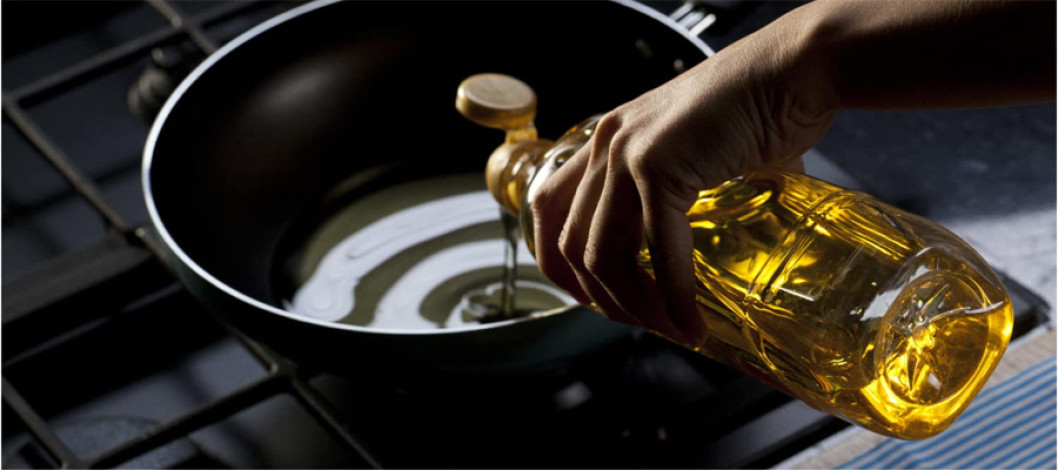
File photo
One of the best and worst things about modern life is being spoilt for choice. Options are great until they become confusing — and cooking oils are no exception.
Earlier, most Indian kitchens followed a simple rule: One main fat, maybe two. Mustard oil in the north, coconut in the south, groundnut in the west, ghee everywhere. Today, shelves are cluttered. Olive oil for salads, sesame for ‘Asian nights’, coconut oil for detox, avocado oil joining in. In such a cluttered environment, what separates one oil from another? We pose a few oily questions to experts.
Nutritionists and doctors say the debate is less about the “best oil” and more about how oils behave under heat, how they’re reused, and how much oil is consumed. Two oils have stood the test of time — olive and coconut, says Delhi-based nutritionist Ishi Khosla. “Extravirgin olive oil has strong evidence for cardiovascular health, while coconut oil, when used appropriately, supports gut health. The problem is not traditional fats, but how much we use and how we process them.”
What to do:
Context matters more than trends. You need to build an oil shelf.
Should one rotate oils?
Yes. Human biology, in fact, supports dietary diversity. Different oils have different fatty acid profiles. Shimpi Patil, head of training, integrative and lifestyle medicine at Luke Coutinho Holistic Healing Systems, says, “Our cells need a balance of fats, not an overload of one type.” Rotating oils helps prevent excess omega-6 intake, fatty acid imbalance, and oxidative stress that can occur when the same unstable oil is repeatedly heated.
Historically, Indian kitchens rotated oils naturally — not as a wellness strategy, but because climate, season, and cuisine demanded it. Modern nutrition science broadly supports this approach.
That said, experts caution against excess. “Rotating oils makes nutritional sense, but quantity matters far more,” says health and lifestyle coach Nandita Iyer. Excess fat intake, refined carbohydrates, and calorie surplus have a bigger impact on metabolic health than the oil used on a given day.
What to do:
Use two or three stable cooking fats and rotate them based on cooking method, not trends.
Is smoke point overrated?
Smoke point has become the most quoted number on oil labels, but it is often misunderstood. Smoke point only indicates the temperature at which an oil starts visibly smoking — not how safely it behaves under sustained heat.
“When oil is heated beyond its tolerance, it oxidises, produces free radicals and forms inflammatory compounds,” explains Patil. Oils rich in polyunsaturated fats (PUFAs) are chemically unstable and degrade faster under heat, even with a high smoke point. A reason why many refined seed oils have a “high smoke point” but perform poorly in real cooking. Refining can also raise smoke point while stripping antioxidants that protect oils from oxidation.
“For everyday Indian cooking like tadka, sautéing and shallow frying, heat stability matters more than smoke point alone,” says Anshul Singh, clinical nutritionist at Artemis Hospitals.
Extra-virgin olive oil (EVOO), despite its health halo, is best reserved for salads and low-heat cooking. “Its polyphenols burn easily, its flavour breaks down, and it’s not ideal for high-heat tempering,” Patil adds.
What to do:
Don’t choose oil by smoke point alone, but by chemical stability under heat.
Are traditional Indian fats unhealthy?
Mustard oil, coconut oil and ghee get a bad rap, with many labelling them as “unhealthy”. That perception is rooted in outdated cholesterol science and the low-fat diet era. “Much of the fear is marketing-driven and taken out of dietary context,” says Iyer.
When cold-pressed, unrefined, and used appropriately, these are better suited to Indian cooking styles. WHO and ICMR guidelines recommend limiting saturated fat intake, not eliminating it. The real issue is their industrial processing, overheating, repeated reuse, and excessive quantities.
Endocrinologist Dr Aasim Maldar, however, has a word of caution. “Ghee and coconut oil are not toxic, but they are rich in saturated fats, which can raise LDL cholesterol if overconsumed — especially in people with diabetes or cardiovascular risk,” he says.
Meanwhile, oils like olive and avocado are healthier options — but not miracle foods. “EVOO has strong evidence from trials like PREDIMED, but avocado oil has far less long-term outcome data,” he adds.
What to do:
Use traditional fats, but in moderation.
What does Ayurveda say?
Ayurveda approaches cooking oils through a different lens — not smoke points or fatty acid charts, but digestibility, heat behaviour, and suitability to the individual. Its guiding principle is simple:
“That which digests well is more important than that which merely looks healthy.”
Ayurveda cautions against purposeless switching of oils, as the body develops satmya (a natural adaptability) to foods consumed regularly.
And sudden or constant changes can disturb agni, the digestive fire central to metabolic health.
“Ayurveda advises one primary oil suited to your constitution and environment, with other oils used occasionally and intentionally,” says Subhash Markande, ayurveda consultant at CGH Wellness Experiences.
Classical texts recommend choosing fats based on prakriti (constitution), desha (region), and kala (season).
Crucially, it emphasises that nutritional labels matter less than the oil’s post-heat qualities. Oils that remain stable and digestible after heating are preferred. From an Ayurvedic view, traditional Indian fats transform beneficially with heat. Ghee enhances digestion and nutrient absorption; mustard oil stimulates metabolism; coconut oil cools and soothes inflammation.
Source: Online/OFA






Comment Now